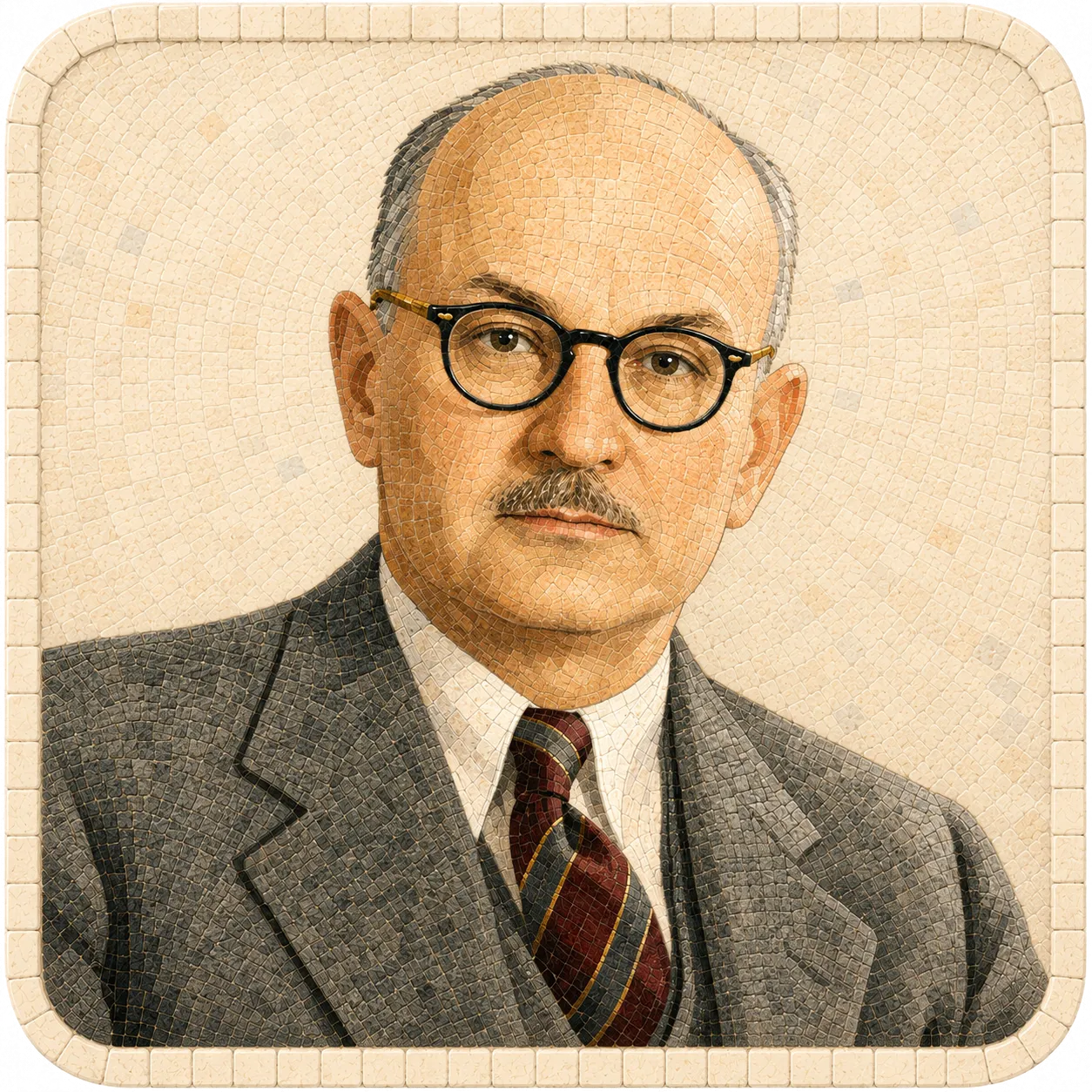
Edward C. Tolman
We learn maps, not just responses.
American psychologist who developed purposive behaviorism and showed that learning can involve cognitive maps.
Learning can happen without immediate reinforcement and appear later when useful.
Who they were
Edward Tolman put thought back into behaviorism. His rats seemed to learn the layout of a maze even without reward, building an internal map and using it once it mattered. Behavior, he argued, is purposive — guided by goals and expectations, not just chains of stimulus and response.
Famous books
What they left on the shelf
Terms they cared about
Ideas worth knowing
Their techniques
How the work was done
Best known as a theorist — their ideas shaped the techniques of those who followed.
Their big idea
Purposive Behaviorism
Edward Tolman argued that behavior is goal-directed and guided by expectations, and that animals form cognitive maps and acquire latent learning — knowledge gained without reinforcement that surfaces when it becomes useful.
Questions in their spirit
What they’d ask you
Sit with one. Answer online, or in the app.
Carry the idea forward
Tolman — What they’d ask you
Psipas asks you one small, honest question at a time — and builds the picture from your answers.