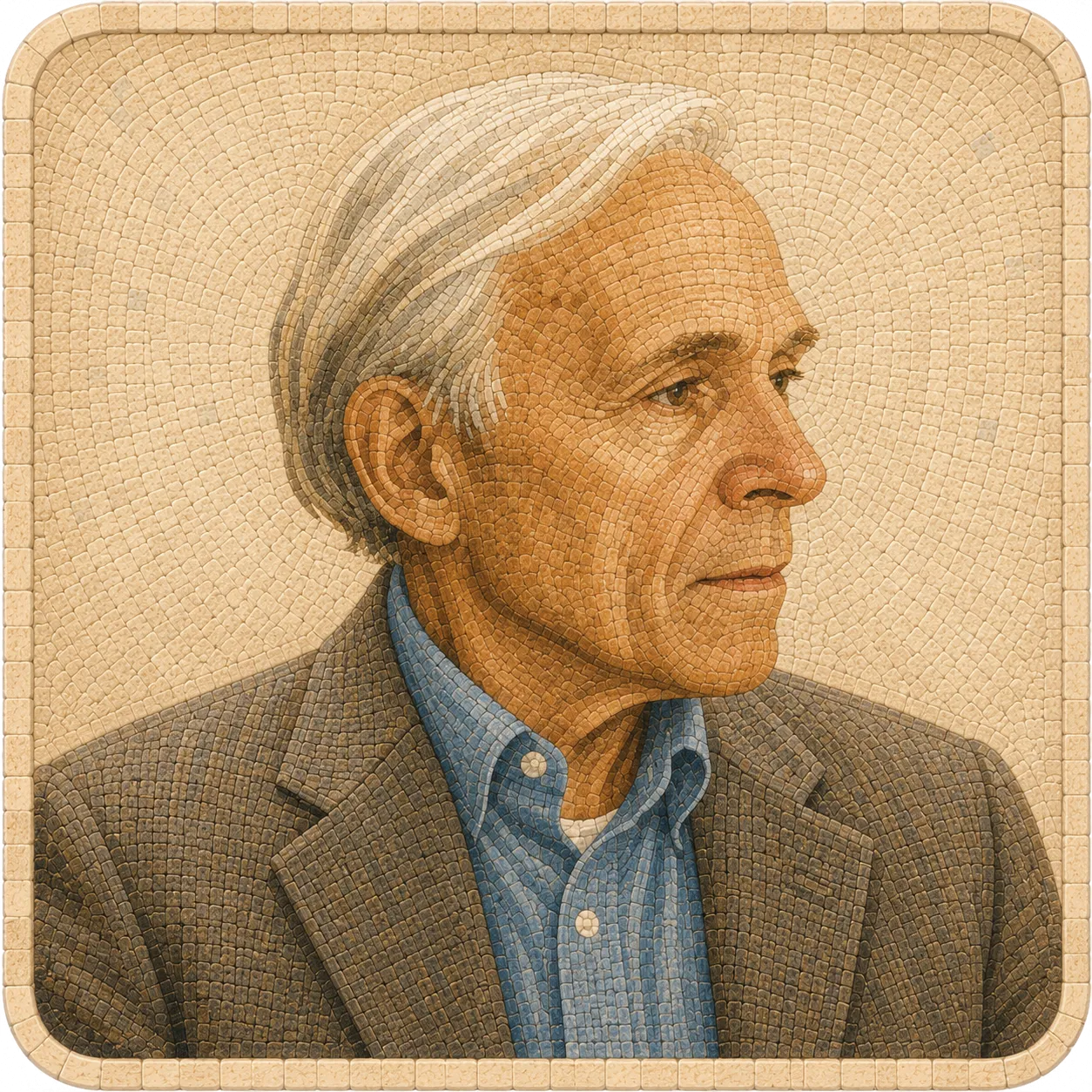
Edward Edinger
Charted the lifelong dialogue between ego and self.
The leading American Jungian of his generation, who mapped the relationship between the everyday 'I' and the larger self.
techniques
The ego must learn that it is not master in its own house.
Who they were
Edward Edinger led the New York Jung Institute and became the clearest American voice of classical Jungian thought. His central image is the ego-self axis: the living connection between the small everyday 'I' and the larger centre of the psyche. When that link is intact a person can weather much; when the ego confuses itself with the self, the result is inflation — the quiet grandiosity that precedes a fall — and when the link breaks altogether, meaninglessness follows. He read the alchemists as Jung had, treating their operations as stages of psychological transformation, and argued that modern people who have lost religion must now consciously carry the questions religion once held for them.
Famous books
What they left on the shelf
Terms they cared about
Ideas worth knowing
Their big idea
Analytical Psychology
Carl Jung held that beneath the personal mind lies a deeper layer shared across humanity, peopled by ancient images he called archetypes. Growing whole means facing the parts of ourselves we'd rather not see, the shadow, and slowly becoming who we truly are.
The approach they founded
Analytical (Jungian) Therapy
A journey toward wholeness through symbols, dreams and the integration of the shadow.
Questions in their spirit
What they’d ask you
Sit with one. Answer online, or in the app.


Carry the idea forward
Edinger — What they’d ask you
Psipas asks you one small, honest question at a time — and builds the picture from your answers.