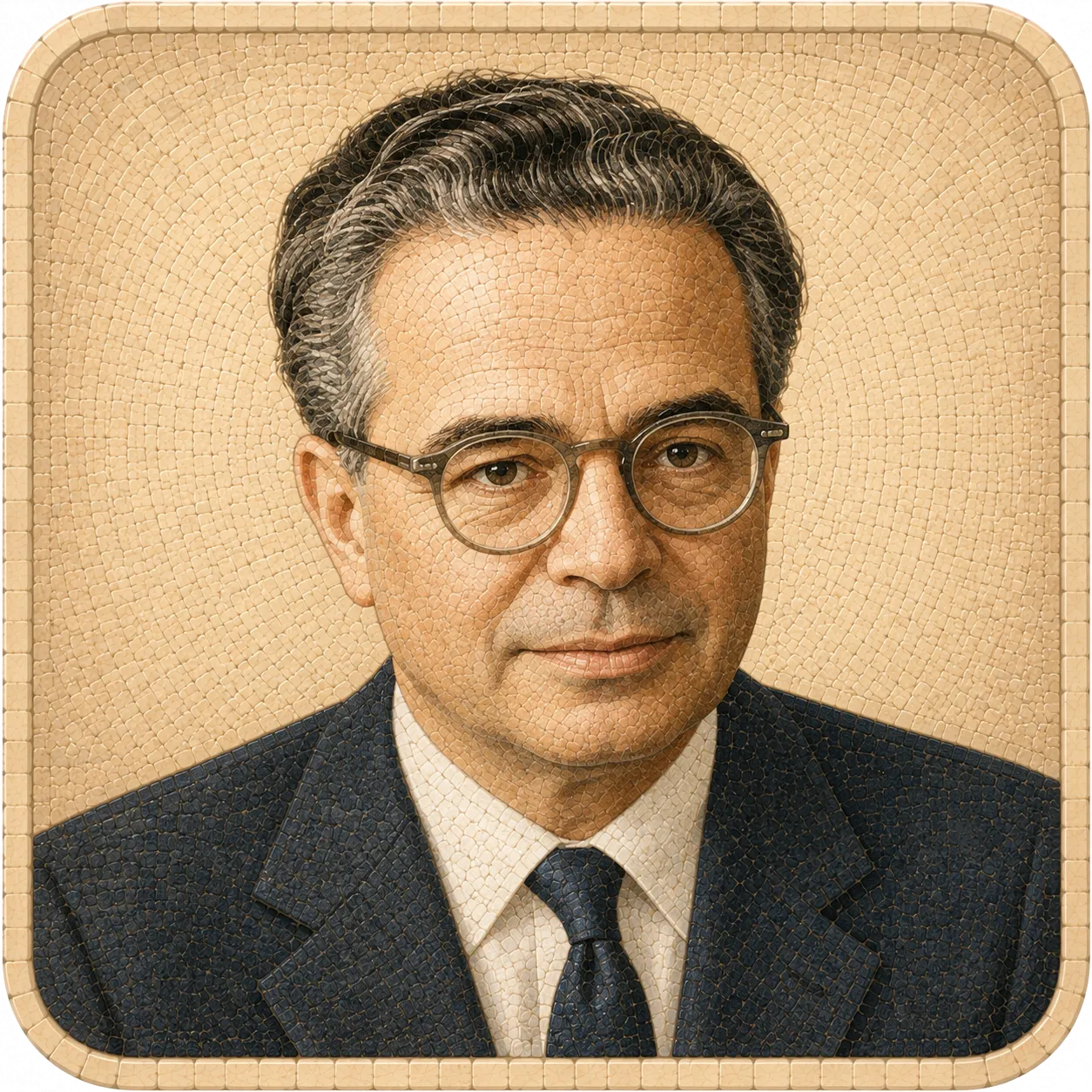
Erich Neumann
Traced how consciousness itself was born.
Jung's most original follower, who showed that the growth of an individual mind retraces the whole history of human consciousness.
techniques
The unconscious, like every living thing, changes and develops with the conscious mind.
Who they were
Erich Neumann trained as a physician and philosopher in Berlin, fled Nazi Germany in 1934, and built his life's work in Tel Aviv, corresponding with Jung across the distance. His great claim was that the development of every individual mind repeats, in compressed form, the emergence of consciousness in humanity as a whole — beginning in the uroboros, the round wholeness before there is any 'I' at all, and passing through a series of hard separations from the Great Mother. He also insisted, against the tenor of his times, that morality built only on repressing the shadow produces the very evil it fears. He died at fifty-five, with much of his work unpublished.
Famous books
What they left on the shelf
Terms they cared about
Ideas worth knowing
Their big idea
Analytical Psychology
Carl Jung held that beneath the personal mind lies a deeper layer shared across humanity, peopled by ancient images he called archetypes. Growing whole means facing the parts of ourselves we'd rather not see, the shadow, and slowly becoming who we truly are.
The approach they founded
Analytical (Jungian) Therapy
A journey toward wholeness through symbols, dreams and the integration of the shadow.
Questions in their spirit
What they’d ask you
Sit with one. Answer online, or in the app.


Carry the idea forward
Neumann — What they’d ask you
Psipas asks you one small, honest question at a time — and builds the picture from your answers.