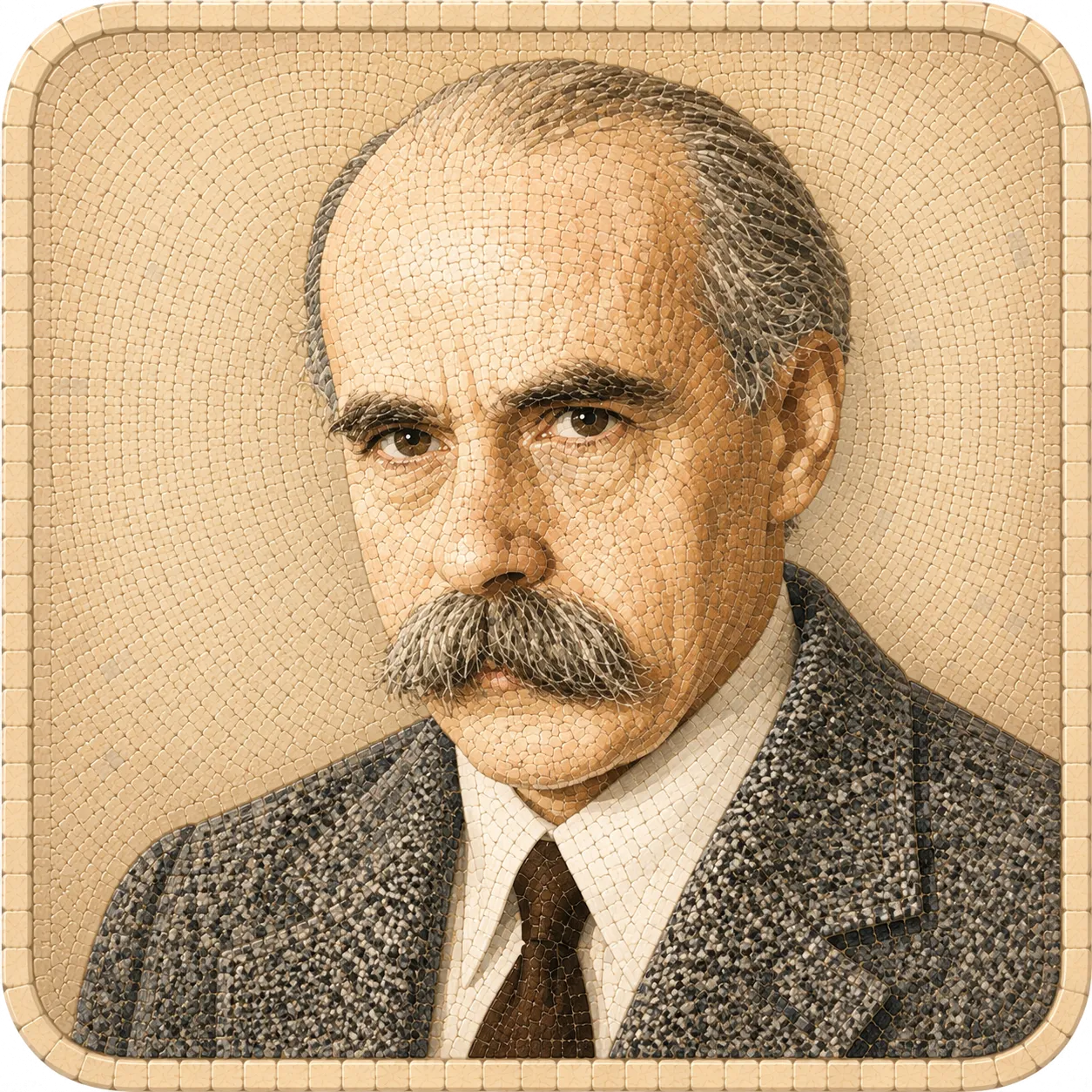
Max Wertheimer
The whole is more than its parts
The founder of Gestalt psychology, who insisted the mind perceives wholes, not fragments.
techniques
The whole is something other than the sum of its parts.
Who they were
Max Wertheimer's central insight came from a simple illusion: two still lights flashed in sequence appear to move. From that observation he argued that the mind naturally organizes experience into meaningful wholes rather than assembling it piece by piece. He founded the Gestalt school, and late in life, after fleeing Nazi Germany for the United States, he turned the same lens on thinking itself — showing how genuine understanding comes from seeing a problem whole.
Famous books
What they left on the shelf
Terms they cared about
Ideas worth knowing
Their techniques
How the work was done
Their big idea
Gestalt Psychology
Max Wertheimer argued that the mind grasps whole patterns before it notices the parts, so that an experience is more than the sum of its pieces. We see motion in still frames and shape in scattered dots because perception naturally organizes the world into meaningful wholes.
Questions in their spirit
What they’d ask you
Sit with one. Answer online, or in the app.

Carry the idea forward
Wertheimer — What they’d ask you
Psipas asks you one small, honest question at a time — and builds the picture from your answers.