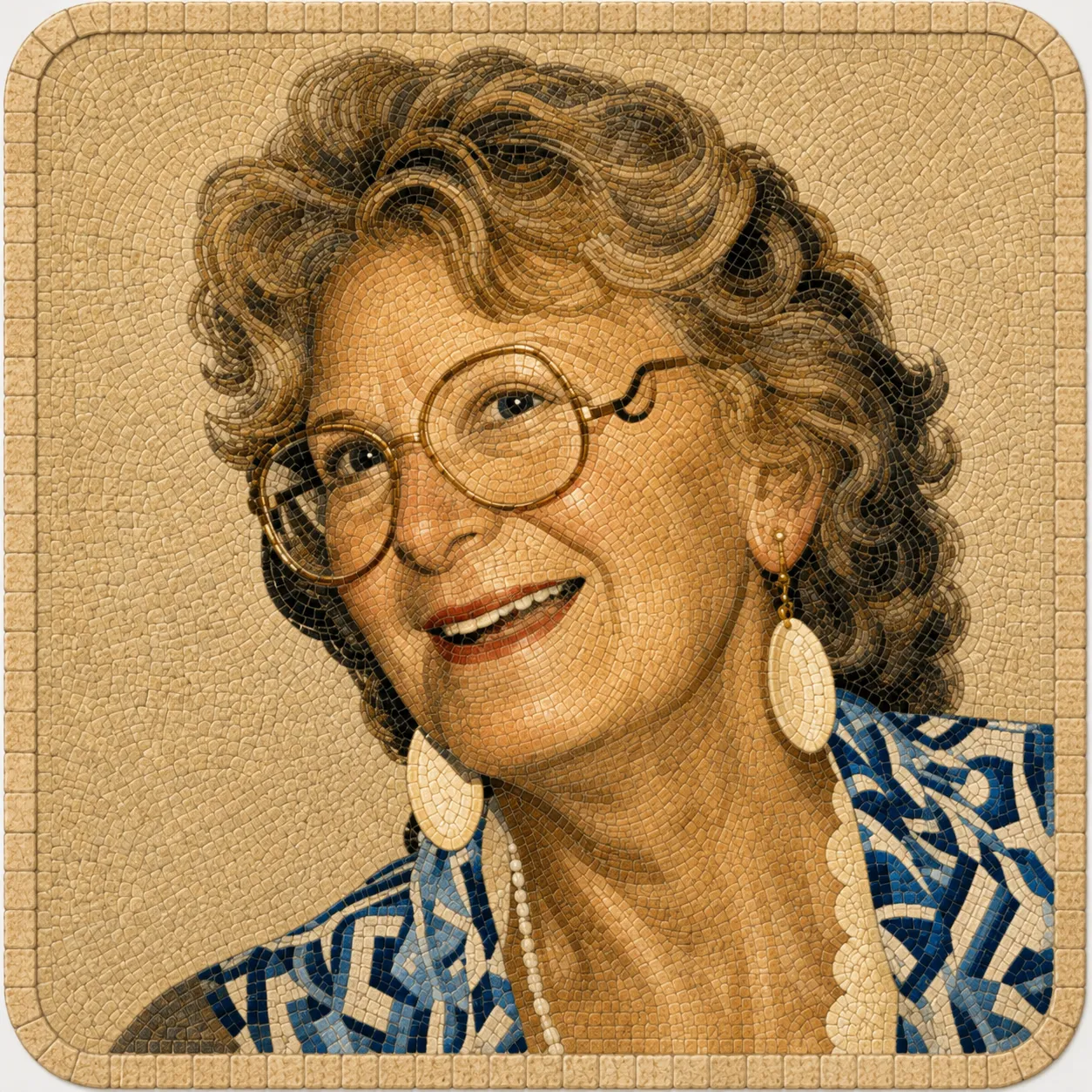
Virginia Satir
Heard what families do instead of speaking plainly.
The mother of family therapy, who showed that under stress people fall into a handful of predictable postures — and can learn to step out of them.
techniques
Once a human being has arrived on this earth, communication is the largest single factor determining what kinds of relationships they make.
Who they were
Virginia Satir treated the family, not the patient. Watching households under pressure, she noticed people reach for one of a few survival postures: the Placater who agrees to keep the peace, the Blamer who attacks first, the Computer who retreats into reason, and the Distracter who deflects with a joke. None of them says the plain thing. Against these she set congruence — matching your words to what you actually feel — and taught it as a skill rather than a personality trait. She was warm and physical in her work, sculpting families into living statues of their own dynamics so they could see the shape they were holding. Her belief was simple: self-worth is the pot everything else is cooked in.
Famous books
What they left on the shelf
Terms they cared about
Ideas worth knowing
Their big idea
The Satir Model
Virginia Satir treated the family rather than the patient. Under stress people fall into survival postures — placating, blaming, computing, distracting — instead of saying the plain thing. The work is congruence, and it rests on self-worth.
The approach they founded
The Satir Model
Treats the family as a system whose members fall into survival postures under stress, and builds congruent communication on a foundation of self-worth.
Questions in their spirit
What they’d ask you
Sit with one. Answer online, or in the app.
Carry the idea forward
Satir — What they’d ask you
Psipas asks you one small, honest question at a time — and builds the picture from your answers.