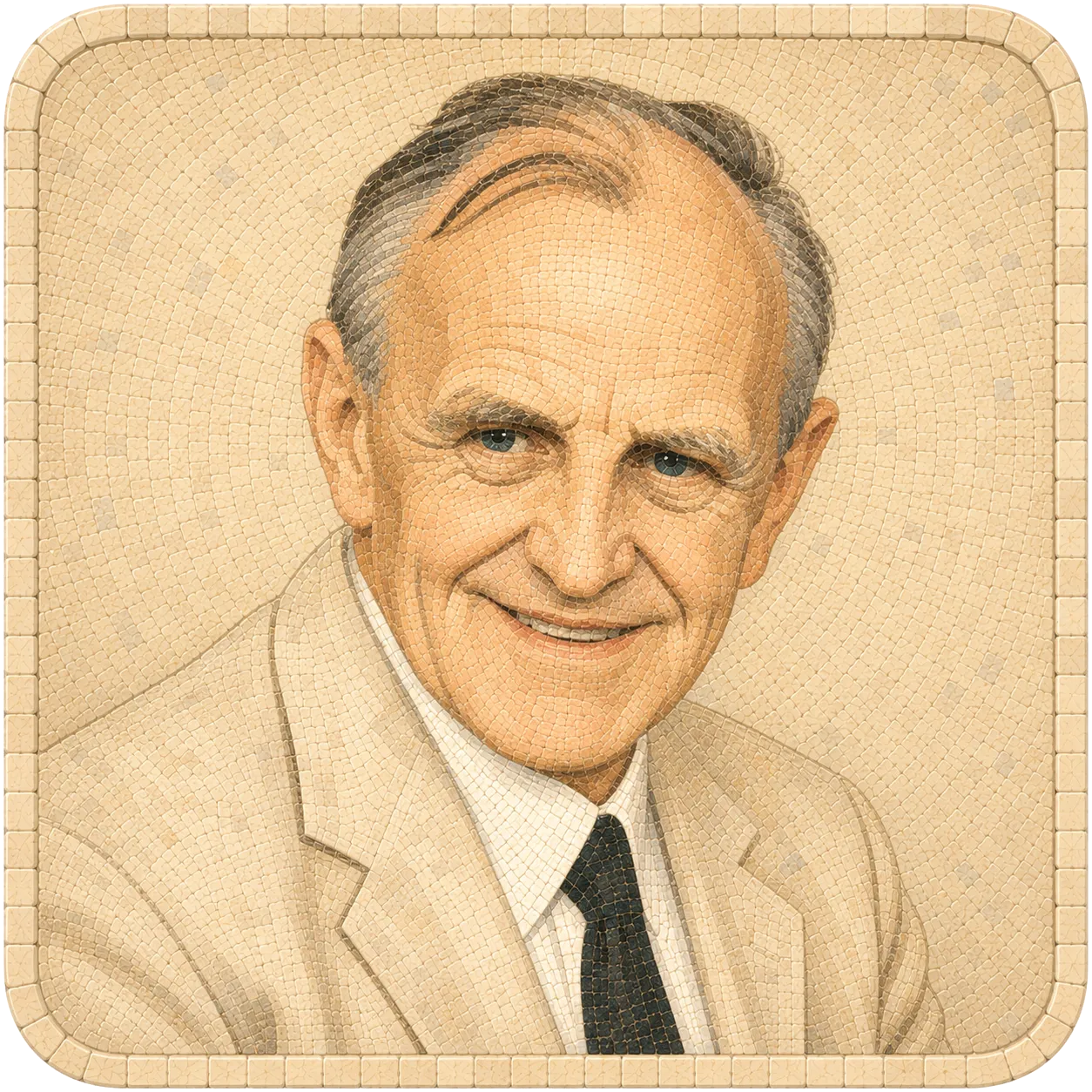
Donald Winnicott
There is no such thing as a baby — only a baby and someone
The pediatrician-turned-analyst who showed how ordinary, imperfect care lets a real self take shape.
It is a joy to be hidden, and disaster not to be found.
Who they were
Donald Winnicott spent decades as a children's doctor before he became one of the most humane voices in psychoanalysis, and he never lost the pediatrician's eye for the ordinary bond between a baby and whoever holds it. He argued that a caregiver need not be perfect, only "good enough" — reliable in a way that lets an infant slowly discover that the world can be trusted. From that holding grows a spontaneous "true self"; when a child must constantly comply to keep the bond, a "false self" forms over it instead. His idea of the transitional object — the beloved blanket or teddy that is neither wholly "me" nor wholly "not-me" — named the small space where play, creativity, and culture begin. Gentle and undogmatic, he gave parents and clinicians permission to be human.
Famous books
What they left on the shelf
Terms they cared about
Ideas worth knowing
Their techniques
How the work was done
Their big idea
The Good-Enough Environment
Donald Winnicott held that a real, spontaneous self grows out of ordinary, reliable care — not perfect care. A "good-enough" caregiver and a safe holding environment let the true self emerge, give the transitional object its magic, and open the space where play and creativity begin.
The approach they founded
Psychoanalysis
The original talking cure. Long, deep exploration of the unconscious, early life and the patterns we repeat.
Questions in their spirit
What they’d ask you
Sit with one. Answer online, or in the app.


Carry the idea forward
Winnicott — What they’d ask you
Psipas asks you one small, honest question at a time — and builds the picture from your answers.